
For the joint that's been hurting for two years, we offer non-surgical and non-invasive options.
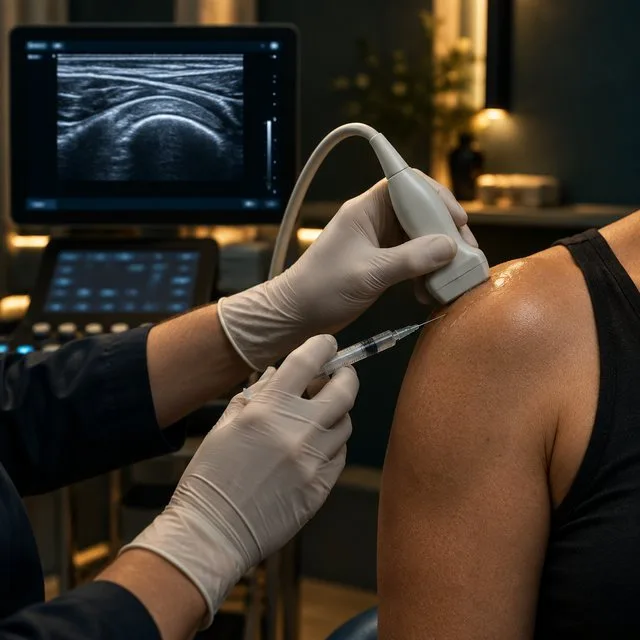
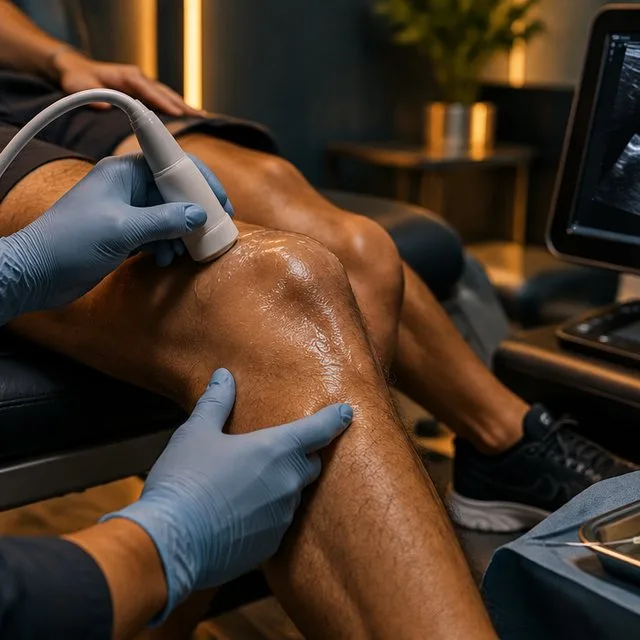
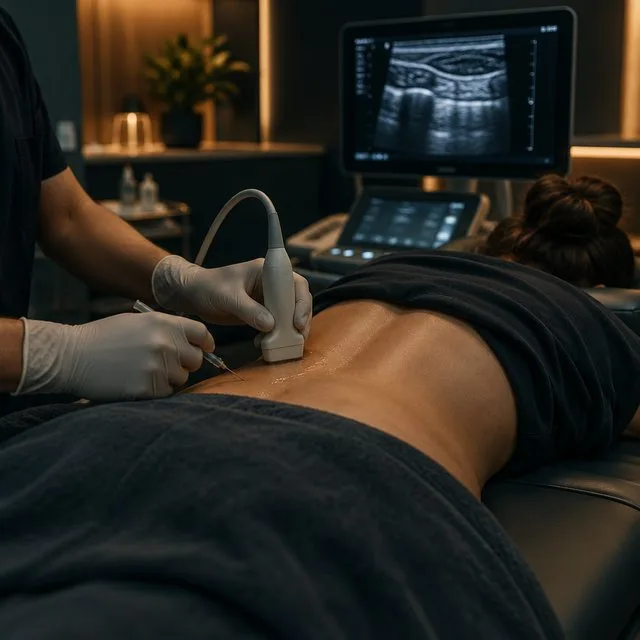
Image-guided regenerative injections for knee, shoulder, hip and low back pain, for patients who want to stay active and are not ready for joint replacement.
Where this applies.
- Knee
- Osteoarthritis, meniscal irritation, patellar tendon pain, stiffness after a prior injury.
- Shoulder
- Rotator cuff tendinopathy, partial-thickness tears, bursitis, early joint degeneration.
- Hip
- Early to moderate arthritis, gluteal tendinopathy, groin and lateral hip pain.
- Low back
- Facet-related pain and degenerative changes, assessed alongside your imaging.
We stage the joint before we treat it.
Your consultation includes a physical examination, a review of any X-rays or MRI you already have, and diagnostic ultrasound where it adds information. Arthritis is graded; range of motion is measured in degrees; pain and function are recorded on validated scales so that the follow-up visit has something real to compare against.
Patients with advanced, bone-on-bone degeneration are generally better served by an orthopedic surgeon. When that is what we find, that is what we say.
What we measure
- Imaging
- Existing X-ray or MRI reviewed; diagnostic ultrasound in clinic
- Grading
- Arthritis staged on the Kellgren-Lawrence scale (grade 0–4)
- Motion
- Range of motion measured in degrees
- Pain
- Recorded at rest and on load (0–10 scale)
- Function
- Stairs, walking distance, sleep interference, and what you had to stop doing
What to expect.
- Treatment day
Ultrasound-guided injection in clinic, typically under an hour. You walk out. Arrange a ride if the joint treated is a weight-bearing one.
- Days 1–7
Soreness in the treated joint is common. Activity is limited and specified in writing; ice and acetaminophen as directed.
- Weeks 2–6
Graded return to activity with a movement plan. Most changes patients notice begin in this window.
- Weeks 8–12 · Review
Pain, motion and function re-measured against baseline, and a decision made about further treatment.
Important
Regenerative injections for joint pain are not approved by the FDA for the treatment of arthritis or orthopedic conditions, and outcomes vary between patients and between joints. We will review the current evidence with you honestly, including its limits, and discuss alternatives such as physical therapy, corticosteroid or hyaluronic acid injection and surgical consultation. We do not promise that you will avoid surgery.
Questions, answered plainly.
Will this let me avoid a knee replacement?
Sometimes patients delay surgery; sometimes they do not. Anyone who promises you a specific outcome before examining the joint is guessing. We will tell you what your imaging and examination suggest.
How soon can I go back to the gym?
You will leave with written activity limits and a return-to-activity schedule, usually graded over two to six weeks depending on the joint and the work you do.
Can you treat more than one joint?
Yes, though we usually sequence them so that we can tell what is responding to what.
Do I need to bring my imaging?
Please do. Bring the images themselves, on disc or portal access, not just the radiology report.
Choose a time that suits you.
Pick a slot below and you will receive a confirmation right away. Prefer to talk first? Call 614-732-6509.
Start with a conversation.
Thirty minutes, no obligation, and a clear answer about whether we can help you.
Book a consultation →